Rhinoplasty
It is the surgery to repair deformities of the nose either during development (aesthetic rhinoplasty) or as a result of trauma (reconstructive rhinoplasty).
It may involve a section of skin (nasal bridge, styloid process), cartilage (pterygoid cartilage, septal cartilage), or even bone (nasal bones).
The type of deformity also determines the restoration technique. It can generally be distinguished into two categories, depending on the route of access to the interior of the nose.
It is performed through two incisions inside the nostrils without external incisions.
It was the method of choice in plastic surgery until recently and continues to be performed in cases of minor deformities that do not require additional support and have not been preceded by other nasal surgery.
The method includes minor shaping of the nasal tip, removal of the hump (hump) on the back of the nose and the pyramidal muscle, and lateral osteotomies.
At the same time, any scoliosis of the nasal septum is repaired or hypertrophic nasal conchae are treated.
If greater shaping is required, the pterygoid cartilages are exposed and shaped appropriately (delivery technique) through double internal incisions in the nostrils.
Internal tampons are placed on the nose, which remain for one day, and externally, a special splint is placed, which is maintained for the next 10 days.
Bruising may appear on the sides of the nose, which subsides on the 3rd – 4th postoperative day.
Closed rhinoplasty has the advantage of not having any external incisions, however, the internal incisions follow a healing phase that lasts, as with any wound, several months until the final aesthetic result is achieved.
However, compared to other methods, it offers significantly less postoperative swelling.
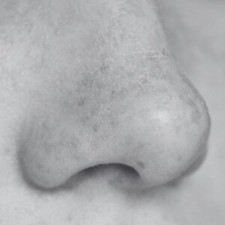
In cases of nose reoperation, post-traumatic deformities, or noses that require additional support for functional or aesthetic reasons, open rhinoplasty offers precision and flexibility to the plastic surgeon.
It is performed through a small incision like a gull’s wing, in the middle of the skin of the styloid, from which the entire tip of the nose and the bridge of the nose are revealed.
It is the method of choice for the repair of deformities of the nasal tip (e.g. bulbous nasal tip) through special sutures and often with the use of cartilage grafts (shield grafts, spreader grafts, alar tip grafts, collumella struts), which are taken either from the deepest part of the cartilaginous septum, or from the auricle or from the ribs of the chest.
A suture is placed on the skin and is removed on the 5th postoperative day.
It leaves behind postoperative swelling that lasts 4-8 weeks, until the final shape of the nose is revealed, but the aesthetic result is worth the extra wait.
The surgery, regardless of the technique, is performed under general anesthesia and the use of vasoconstrictor substances, lasts 2-4 hours and is intended for people whose facial development has been completed.
Before surgery, a clinical and laboratory examination is performed, which includes blood tests, a chest and nasal bone X-ray (in case of diaphragmatic scoliosis), and a cardiogram.
In general, rhinoplasty surgery requires the plastic surgeon to strike a balance between technical knowledge, surgical precision, and artistic instinct.
The expectations of the interested party should be the subject of extensive discussion, with an explanation of the aesthetic zones of the nose and face, the possible complications of each method, the “rule of three” that imposes harmony on a face, and they should address the cephalometric results resulting from the clinical examination.
The important thing is not to create a specific nose, but a nose that blends harmoniously with the rest of the face and does not look surgically done.
For this reason, preoperative frontal and profile photographs are taken, which are superimposed on the existing anatomy of the nose, in order to demonstrate all the anatomical limitations that direct the final aesthetic result. In other words, each nose constitutes a specific base on which the plastic surgeon can “step” and, in collaboration with the patient, arrive at the desired shape.
During the visit to the clinic, the existing options that are in line with the wishes of the interested party, the details of the procedure, and finally the cost of rhinoplasty will be thoroughly analyzed.

ΆΡΙΣΤΗΤο Trustindex επαληθεύει ότι η αρχική πηγή της κριτικής είναι Google. Εξαιρετικος Γιατρός!ότι θεραπείες έχω κάνει εχω κάνει έχω δει αποτέλεσμα!και σίγουρα θα συνεχίσω με ότι μου έχει προτείνει.Το Trustindex επαληθεύει ότι η αρχική πηγή της κριτικής είναι Google. Ο καλύτερος με διαφορά! Εξαίρετος επιστήμονας και άνθρωπος, πάντα με ολιστική προσέγγιση στον ασθενή!Το Trustindex επαληθεύει ότι η αρχική πηγή της κριτικής είναι Google. Εξαιρετικός πλαστικός χειρουργός ,με άνθρωπο κεντρική αντιμετώπιση και πολύ μεγάλη εμπειρία . Πολύ ήρεμος άνθρωπος, ειλικρινής με απόλυτη έμφαση στη λεπτομέρεια. Value for money σε απόλυτη ισορροπία.Το Trustindex επαληθεύει ότι η αρχική πηγή της κριτικής είναι Google. Δεν έχω ξαναγράψει κριτική, αλλά αυτή τη φορά πραγματικά αξίζει και με το παραπάνω! Από την πρώτη μας συνάντηση, ο γιατρός με έκανε να νιώσω ασφάλεια και εμπιστοσύνη.Πριν έναν μήνα λοιπόν υποβληθηκα σε λιποαναρρόφηση στα κάτω άκρα. Ο κ. Μαλτζάρης ήταν – και εξακολουθεί να είναι – δίπλα μου καθημερινά στη μετεγχειρητική φροντίδα, με προσοχή στη λεπτομέρεια, χρήσιμες συμβουλές, ενδιαφέρον και ευγένεια. Δεν ένιωσα ποτέ πως είμαι απλώς ένα περιστατικό, και για μένα αυτό κάνει όλη τη διαφορά. Ειλικρινά, γιατρέ μου, σας ευχαριστώ και ανυπομονώ να δούμε μαζί τα τελικά αποτελέσματα!Το Trustindex επαληθεύει ότι η αρχική πηγή της κριτικής είναι Google. Είχα μια εξαιρετική εμπειρία με τον δρ. Μαλτζαρης! Είχα μια ελιά στη μύτη που χρειαζόταν αφαίρεση και η διαδικασία ήταν γρήγορη, ανώδυνη και επαγγελματική. Ο γιατρός με έκανε να νιώσω άνετα και μου εξήγησε τα πάντα με λεπτομέρεια. Η επούλωση προχωράει πολύ γρήγορα, χωρίς πόνο ή ενόχληση, και φαίνεται πως δεν θα μείνει κανένα σημάδι. Είμαι απόλυτα ικανοποιημένη και θα τον πρότεινα ανεπιφύλακτα!